I began my love for community back in the mid-’90s, working by day as the “Office Manager” for a 5-person outfit called “Optigon Interactive” that had just launched the DOS version of a gaming platform called “The Total Entertainment Network.”
At night, I became the “Online Personality” for the service, jumping from 4 to 6 computers, creating distinct characters and chatting with anyone who joined the beta test to make the platform feel alive and humming.
Eventually, Optigon Interactive would merge with a game-focused 3-person operation called Outland, and we became “Total Entertainment Network”, or TEN, and secured contracts with big game titles like DOOM, Quake II, Command and Conquer, Diablo, and others while at the same time coding our own version of the beer and pretzel’s classic Wiz-War as well as a few others. We provided the service that would connect players from all over the world on their 56K modems to play their favorite games. There were also chat rooms, and big plans to add all sorts of other types of “Entertainment” into the mix.
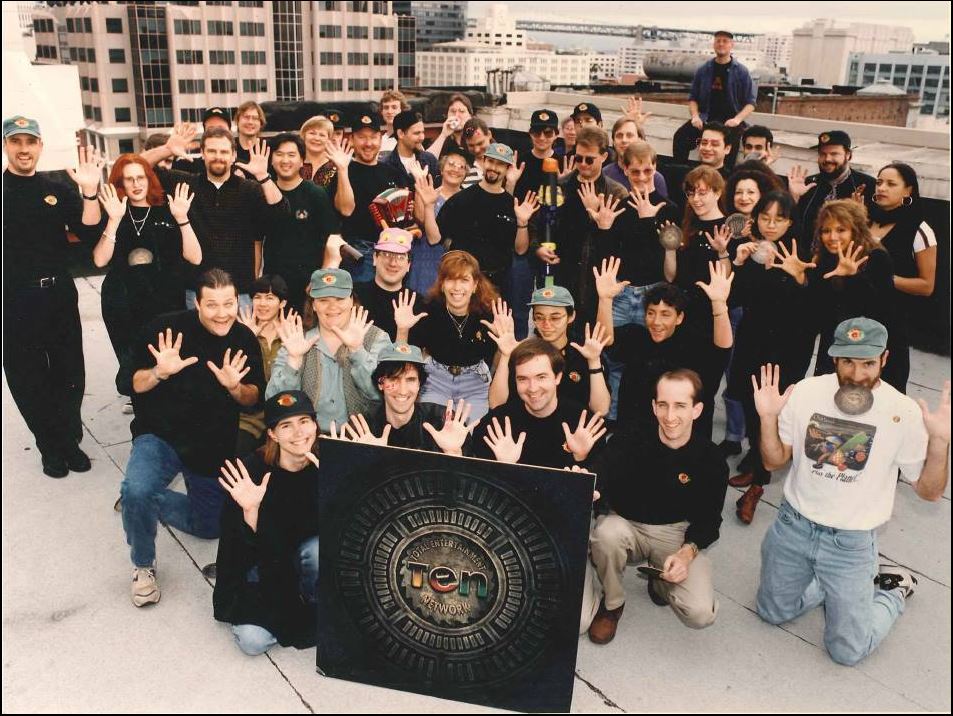
Seeing – and certainly feeling – the writing on the wall, in 1998 we smartly pivoted away from this model and began our foray into casual classic games, providing games like Chess, Checkers, Spades, Hearts and Euchre to players on our own “ten.net” site, as well as securing deals with a number of search engines to provide games, similar to how Yahoo’s search engine provided their classic games to their users. This proved to be fruitful, but we were a “.net” in a “.com” world, and as such, we looked to find a new name, during a time where everyone was snatching up every name available, hoping to sell them to the highest bidders. Thankfully, we ended up making a deal with the Walt Kelly estate and we became “Pogo.com” in September of 1999.
For Pogo, I took what I’d learned from TEN, and launched a much better online volunteer program, and managed a group of 3 to handle around 350 active “UltraGuides” and their superiors,”MagnaGuides”, who helped new players navigate the site, engage players in chat, and work through a process to handle griefers, trolls, and cheaters.
Things were looking great for the site. We’d signed a deal with Excite/@Home to purchase the site a few days before the .com world began to crash in 2000. The deal would have gone through January 1, 2001, but the state of the world wouldn’t allow it, and Excite had no choice but to cancel the deal.
After a month and a half of feeling like we were doomed as we watched the fall of so many .coms we’d thought couldn’t fail (remember WebVan?), Electronic Arts purchased Pogo to fulfill a long-standing deal with AOL to provide their service with games. It was a win-win, for sure, and to EA’s credit, they treated us very well and we thrived even more.
But, they also ended the volunteer program, as things had changed in the online world, and volunteers became an HR liability.
Thus, I moved into managing our Customer Support for the overarching Customer Retention Management Department. A bit of a pivot for me, but with a great staff, we were able to effectively train up and implement processes for our new team of CS reps in India. We flew out to meet the team, and in one memorable meeting, we had them watch a PowerPoint presentation explaining the many, many, many offensive phrases they might encounter in their day-to-day jobs. They learned a lot that day, and probably lost a little respect for humanity in the process.
Eventually I was promoted to “Sr. Manager, Outsource Services” where I managed a group of 5 to oversee our operations in India and the Philippines. While I did appreciate the position, and quickly learned to understand employee structure, staffing, budgeting, and the importance of training and quality assurance, I longed to connect with the players in a more holistic way. So, when the chance to become the Community Manager back on the Pogo product became available, I leapt.
Helping create a hub of “Community” at Pogo turned out to be a career highlight. Working with producers, artists and designers we launched “The Pogo News” where I created several weekly columns: Letters to the Editor, where I addressed player questions and took note of their opinions; Ms. Netiquette, a question and answer column that addressed how to handle sticky social situations in chat and gameplay; and the Player Spotlight, where we highlighted a different Pogo player each week with a series of fun questions.
Furthermore, we had a weekly opinion poll, a “Winner’s Circle” column where we’d interview one of our many big winners, and a number of events. Every month I interviewed an employee from one of our many departments for a Behind the Scenes column that proved to be quite popular. And, of course, we’d publish upcoming events, Coming Soon announcements, tutorials, and address any technical or social issues that had arisen.
Pogo had created a robust avatar system we called “Pogo Minis.” Players could choose their face, skin color, eye shape, eye-color, backgrounds, accessories and much more. It was an incredibly popular feature that introduced one of the very first instances of microtransactions in gaming.

I was responsible for naming them and working with the art team on coming up with new Mini outfits, backgrounds and accessories to create. One of my other tasks early on was to go from chat room to chat room looking for spectacular “Minis” that we could post as real-life examples on our Pogo Mini page. It was a dreadful process, scouring profile after profile in hopes of finding one Mini worth showcasing. After about two or three somewhat fruitless days of doing this, I realized that rather than ME go looking for these Minis, I could create an event where players would bring their Minis to ME and receive recognition in the Mini Hall of Fame. This led to a weekly event we called “Amazing Minis”, where players would compete to have their Mini highlighted in the Hall of Fame. This also created a great deal of excitement around the Minis, and resulted in an increase of players purchasing Mini items that led to an increase in revenue for Pogo. So much so, that a week without a Mini-Event resulted in lower revenue.
Soon, I was managing between 2 and 3 other community managers, who oversaw our social media, prize winners, prize fulfillment, and loss-prevention programs.

During my time at Pogo, I had the pleasure of meeting a lot of Pogo members at trade shows, like the AARP Convention. We would always announce our presence and our most devoted players would make the effort to come and meet us in person. We took with us a couple of members from Support because there was always – ALWAYS – someone who made the trek solely to have their issue resolved (and usually the issues did get resolved).
Alas, the world is an ever-changing place, and in 2013 I felt I’d done about all I could do there when an opportunity arose at GSN Games, headquartered in San Francisco. I made the move, began working on a number of GSN products, managing our amazing remote community manager in North Dakota, trying to create some community around our Facebook Casino games, our GSN.com website, at the same time learning a lot about mobile games. We had a few popular ones: GSN Casino, Wheel of Fortune, and a brand new one called Solitaire TriPeaks. It was a confusing time, to be honest. I came in when our Facebook app was riding high – million dollar days were not uncommon. This was due to the fact that for a period of time when you typed “Games” into Facebook’s search engine, you were taken to our games. That helped a lot, but it wasn’t fair to the rest of the games out there, and soon we lost that coveted spot. This resulted in a big change in revenue.

We were poised to launch a huge mobile app called Sparcade, where players would compete with other players to earn real-world money playing popular games like Pac-Man, Tetris, Scrabble, Wheel of Fortune, Two-Dots and Centipede. We even had the Kinda Funny guys at our launch party where they created a nice video. However, it was a big of a legal nightmare. It certainly looked fantastic as a finished product.
Alas, it was not to be. For a number of reasons it became apparent this bird would not fly. The app was scrapped, layoffs were huge, and through “An Island Miracle”, I was put on the TriPeaks Solitaire Team.

My first year at TriPeaks I took over the Facebook Page and strategized with our skeletal marketing and production crew on how to move the needle to garner more followers. I felt an immediate kinship with our players, as they were mostly women over 35 – a demographic I knew well. Thus, it was important to me that we treat them like the intelligent human beings they are, and provide them with content that was engaging, informational, fun, and would keep them coming back. We posted puzzles, jokes, trivia, holiday celebrations, and after we’d launched Solitaire TriPeaks Clubs, we began to post a weekly Top Ten, highlighting the top ten from one of the various leagues each week, and a Club of the Week, where we’d celebrate a variety of achievements Clubs had successfully accomplished.
It took about 4 years, but through our efforts, and despite a very obvious downturn in Facebook numbers, we finally hit 1 million subscribers in the fall of 2021.
As we grew, I took on the role of main copywriter, and came up with a number of names for our Islands, mini-games, events, as well as fun and funny ideas for in-game hazards in one of our more popular mini-games, Club Race.
At TriPeaks, I was a one-man Community show – doing all the community work, all of the social media, quite a bit of copy, all of the blog content, as well as managing a small, but powerful, group of Brand Advocates, who would help promote the game in the comments section, beta-test upcoming features, and alert us to anything we needed to be aware of in the game, or on Facebook (spam, abuse, etc…). Another GSN game, Bingo Bash, had 3 Community Managers and I was definitely jealous as they were able to do so much more with their communities, including a VIP page, greater focus on other social media platforms, and just the ability to talk through community things with each other.
When I joined PeopleFun, they had just launched their Wordscapes Solitaire title, and I was incredibly grateful to become the Community Manager for it. It’s one of the most well-thought out games I’ve ever worked on, and it came with a goldmine of potential content for Social Media (and possibly its own portal page). I had a lot of fun developing the voice and climate for our Facebook and Instagram pages. Honing in on the audience, and bringing them content that will engage them and make them feel like playing the game is a good way to spend their off time.

 Tahd Frentzel Portfolio
Leave a comment