Having been at Pogo for a long time, even when I wasn’t in “Community”, I still worked a great deal with our community, even being featured in Wired Magazine’s article entitled “The Wrinkled Future of Online Gaming.“
In 2005 I became the “Community Manager” for Pogo, a casual game website with over 150 million players from all over the world. Before my arrival, inroads were being made to create a place for players to get that sense of belonging, and there was some movement towards creating a “Community Space.”
This would soon become the Pogo News, and as “Editor” of the news, it was my job to give the site a voice, which in turn gave the company a unique personality.
The first thing we needed was content. If we were to create community, we needed community involvement, so I created a few community-driven weekly columns: Letters to the Editor, where players would write in with their thoughts and questions, which I’d then answer; an etiquette column focused on online manners and gameplay protocol, titled Ms. Netiquette; and a weekly Player Spotlight, where we asked players some interesting information about themselves.
Later, as people made visits to the Pogo news regularly, we added a monthly Behind the Scenes column, where we’d interview employees across different departments to let players know a little bit about what it takes to create a huge site like Pogo.
MS. NETIQUETTE
To many of my former coworkers, I will always be “Ms. Netiquette.” The column was one of my crowning achievements at Pogo, as this column did a lot to instill trust in Pogo’s commitment to fair play and provided chatroom guidance in a fun and entertaining way.
Pogo had multi-player games like Chess, Spades, Hearts, Gin Rummy, as well as a great deal of single-player games
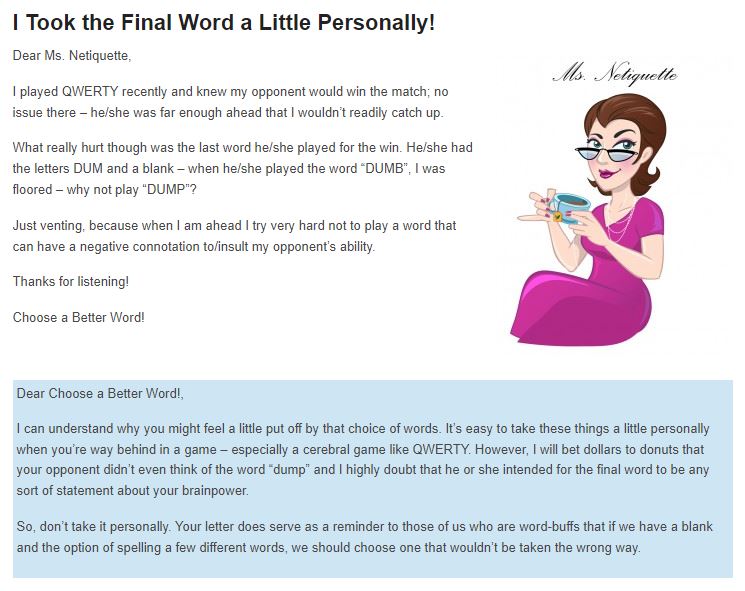
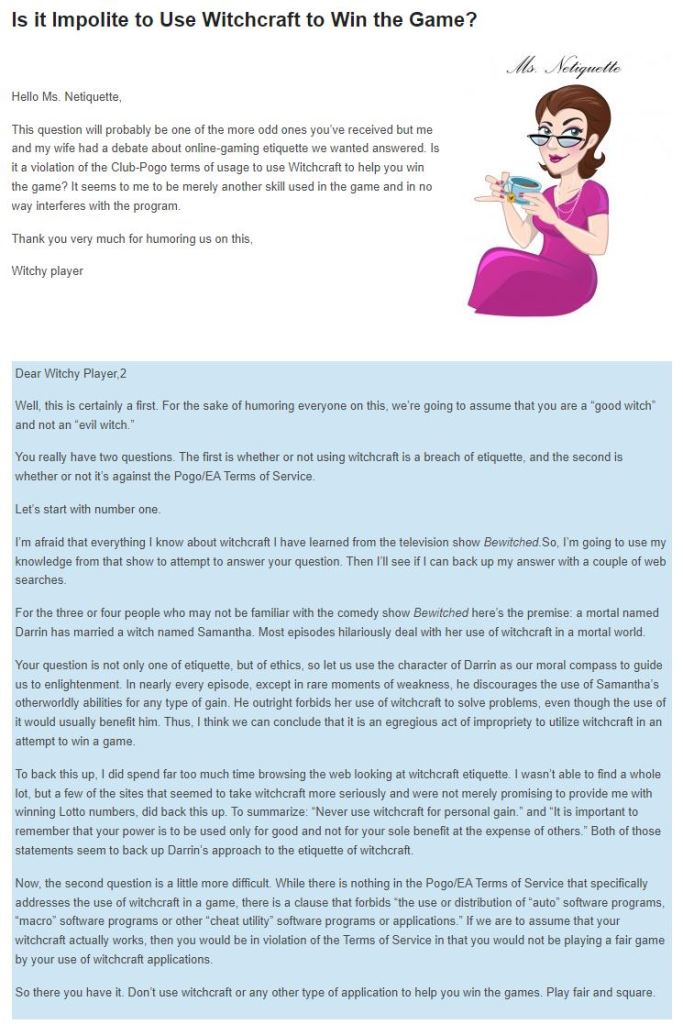
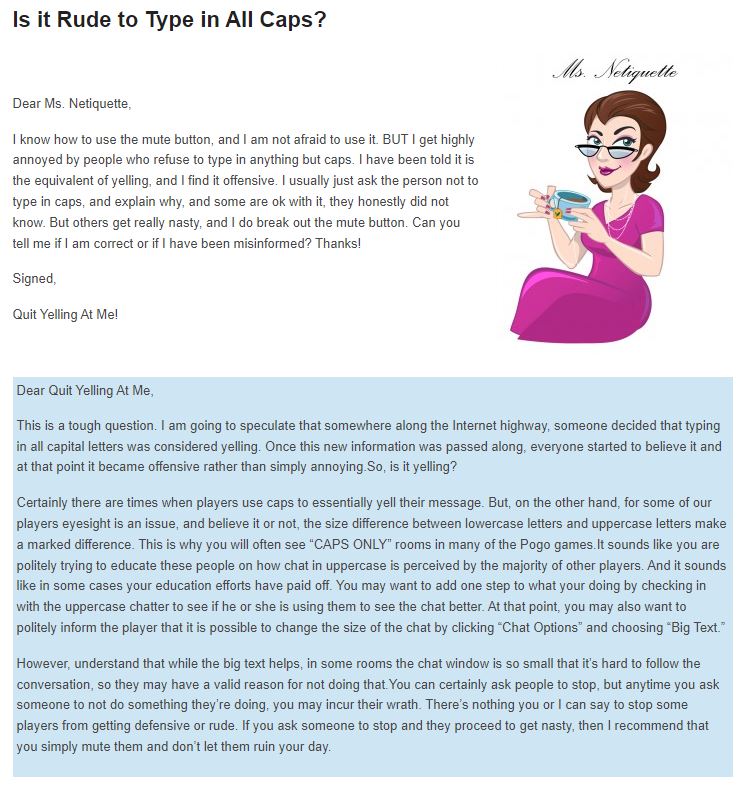
As one might imagine, this led to a lot of questions around the right way to handle situations, and the wrong way. In stepped Ms. Netiquette, a tea-drinking manners master to settle nagging questions, player disputes, and general questions about how to handle certain situations. By the end of my time at Pogo, I’d answered over a thousand letters in around 350 columns. Here are a few examples:
LETTERS TO THE EDITOR
Every Wednesday at around 1:00PM, I’d publish the Letters to the Editor Column, which would consist of between 10 and 14 letters from players. During the height of Pogo, we’d get nearly 100 letters from players every week. I would sift through them all, and find those that were most fit for print.
With any site or company, there will be requests for things that are never going to happen (“Can you make everything free?”), so the goal every week was to address any ongoing issues that we had a plan to fix, include some positive feedback, a letter or two that were helpful to new players, and at least one letter that people might find humorous.
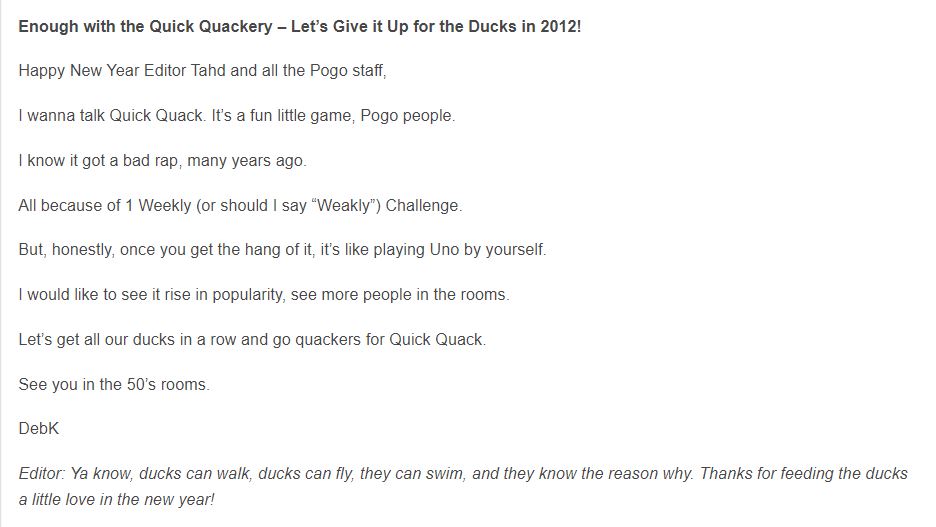
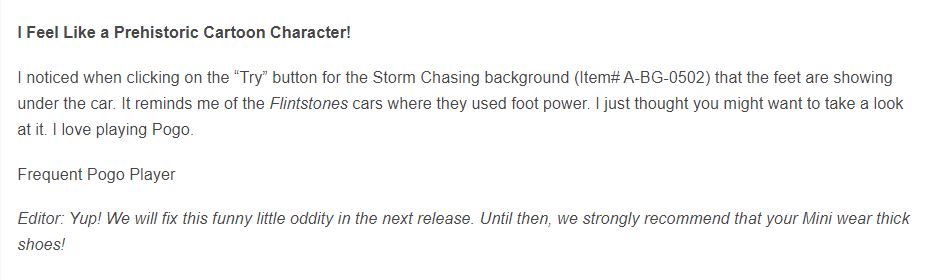
What I loved about the column, as seen above, it not only gave players an opportunity to express their opinions about the site, it also gave them an opportunity to share in the fun. By allowing “The Editor” to have fun answering questions, it encouraged players to share their senses of humor with everyone as well, making a much more entertaining read:
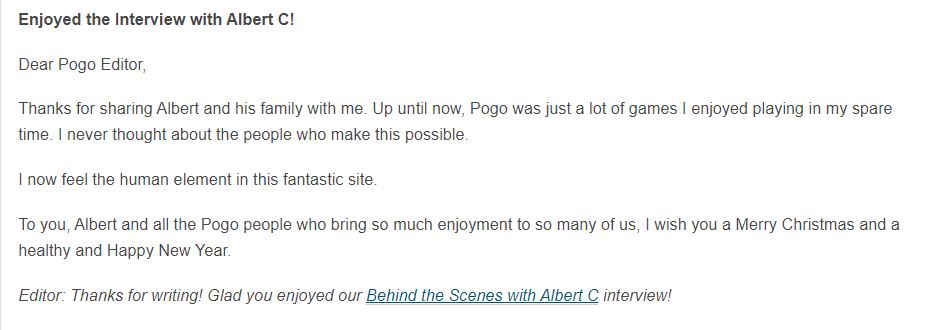
This next letter drives home the point that giving players insight into the lives of some of the people who actually work at their favorite company has emotional power, and when people respond emotionally to something, they are invested:
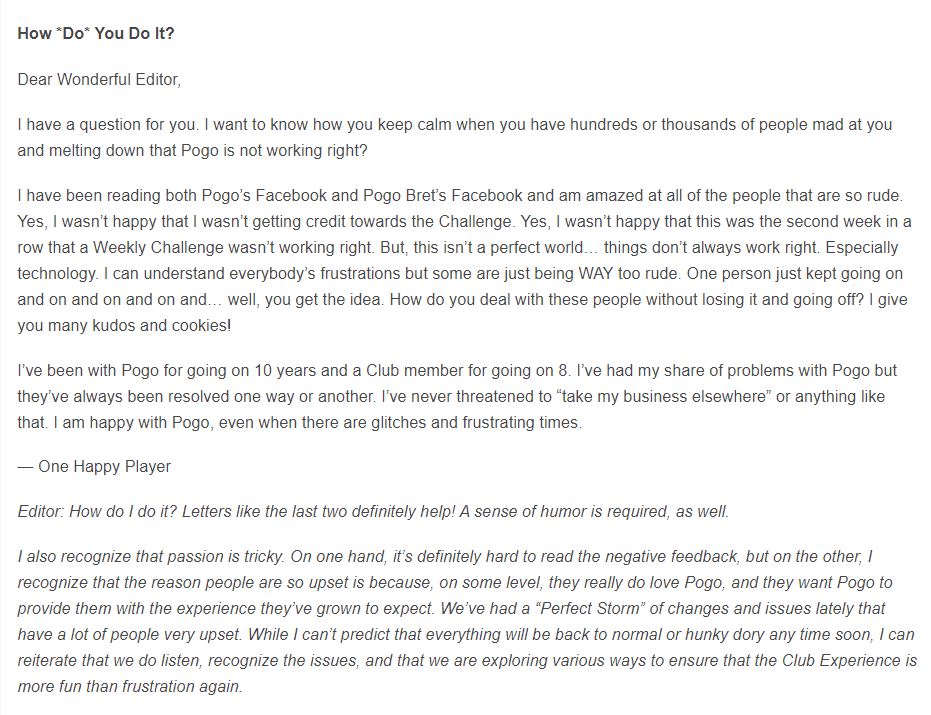
Finally, this letter came in after we had experienced a whole bunch of various issues. I include it here because as a Community Manager dealing with a lot of complaints, it’s important to remember the underlying reason for they complain:
BEHIND THE SCENES AND PLAYER SPOTLIGHT
We also had a monthly “Behind the Scenes” column where I’d interview a variety of employees from Pogo, like artists, engineers, customer support representatives, producers, marketers, and anyone who helped keep the site running. Some were truly fantastic, while others – including one from one of EA’s more flamboyant VPs – were a bit dry and boring. You just never knew. And you never knew what the response would be. After I’d interviewed an artist who retold an absolutely edge-of-your seat story about the day his son was born – he almost wasn’t – the email box exploded. People were so moved they felt they had to write in with how the story affected them, and expressed great relief that the story ended with a healthy baby boy.
This proved true with our Player Spotlight stories. On occasion we’d have someone who felt that their life was saved because of the community of players Pogo provided. One woman recounted how her housebound mom just used to sit around watching TV all day long, and was severely depressed. When her daughter introduced her to Pogo, that suddenly changed. She now had a reason to get up in the morning. She had friends that genuinely cared about her, and a newfound purpose in life.
AMAZING MINIS
One of the best things I did for Pogo was borne out of frustrating boredom. I’d been given the task to go through a bunch of Pogo game rooms, tap on random player’s screen names to look at the avatar, which we called “Minis.” When I found one that looked exceptional, I was to add it to our “Amazing Mini” spotlight page, on our Avatar creation page. Sounds easy enough. But after doing this for a few hours and only finding a few Minis that would be considered “amazing” I was defeated. If I were to do this right by finding uniquely astounding Minis, it would take me nearly 8 hours a week. Suddenly – I realized that I needed the Amazing Minis to come to me. And Pogo’s “Amazing Mini” events were born. They were an instant hit – players loved dressing up their Mini in hopes of being featured on the page. And later, when we began charging actual money for some of the items, the events began to bring in revenue. Players who would never have spent more than their yearly subscription were suddenly happy to invest in their avatar in hopes that it would be featured. But even if it wasn’t – their efforts were seen by their peers and by the judges. It was also a great opportunity for other Pogo employees to get into the game rooms, meet our players, and judge their Minis.

 Tahd Frentzel Portfolio